


Imagine heading to your usual St. Louis polling place, only to discover your congressional district has changed and the candidates on your ballot are unfamiliar. Missouri redistricting has reshaped the political map in St. Louis, altering how communities are grouped and which voices are heard. In this educational guide, we'll break down how Missouri redistricting works, what the new congressional maps mean for your voting rights, and what steps you can take to stay informed and empowered.
Understanding Missouri Redistricting: The Basics
At its core, Missouri redistricting is the process of redrawing political district lines throughout the state. Every ten years, after the United States Census, states update their congressional district, state senate, and house districts to reflect shifts in population. This ensures equal representation for all Missourians and upholds key principles behind the voting rights act. For St. Louis and its surrounding counties, these changes affect whom you vote for in both the state legislature and Congress. These new congressional maps directly impact which communities are kept together, which ones get split, and how effectively voices from every neighborhood can influence their elected officials.
The process matters profoundly because the way district boundaries are drawn influences the political power of individual voters, especially in diverse areas such as St. Louis. If district lines are drawn unfairly, certain groups can be minimized or "cracked" across several districts, reducing their collective influence. Conversely, well-drawn boundaries can help ensure fair and equal access to the political process by maintaining cohesive communities within single districts. This process is overseen by the redistricting office, which updates both the congressional map and legislative district lines to meet both federal requirements and Missouri's unique political landscape.
What is Missouri Redistricting and Why Does it Matter?
Missouri redistricting is not just a bureaucratic process. It decides how neighborhoods, communities of interest, and political blocs are represented at the state and national level. Redistricting helps guarantee that each congressional district contains roughly equal populations. This is crucial for ensuring compliance with the voting rights act and protects against gerrymandering — manipulating district lines for political advantage. St. Louis voters, for instance, have seen how shifts in congressional lines can merge or split communities, potentially changing election outcomes for years to come. Every St. Louis voter is affected by these decisions, from how ballot measures appear on the ballot, to the kind of local representation they receive from their state senate and house members.
How Missouri Redistricting Impacts Ballot Measures
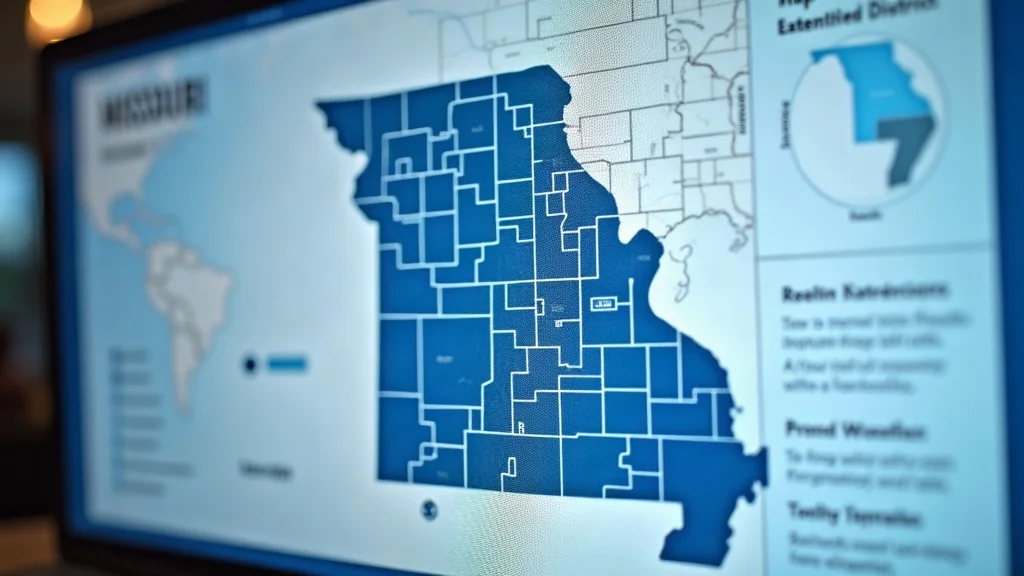
Redistricting doesn't just affect which lawmakers represent you — it also affects how ballot measures are put before Missouri voters. When congressional lines or legislative districts shift, they can alter which communities have enough combined voices to propose or pass ballot measures. These changes might affect signature collection areas, campaign targeting, and even the passage of important local laws and constitutional amendments. For St. Louis, recent cycles of redistricting have sometimes shifted key communities into new districts, changing the dynamics of direct democracy at the local level.
As districts realign, leaders and advocacy groups must adjust strategies, ensuring their messages reach the right voters under the new maps. Understanding these shifts empowers voters and organizations alike to better advocate for the issues that matter most. Monitoring the redistricting office and staying vigilant as changes unfold is essential to keeping your voting rights intact and your community's interests protected.
For a closer look at how local media and civic organizations are helping St. Louis residents navigate these changes, you can explore resources and community updates provided by St. Louis Media Channel. Their coverage often highlights neighborhood impacts and offers practical guidance for voters adjusting to new district boundaries.
What You'll Learn About Missouri Redistricting
- Key concepts of missouri redistricting
- How congressional map changes affect voting rights
- Where to find up-to-date redistricting office resources
- The role of ballot measures in redistricting
- Frequently asked questions about missouri redistricting
A Brief History of Missouri Redistricting
Missouri’s approach to redistricting has evolved over the decades, reflecting both state and federal mandates. In earlier cycles, congressional maps were typically drawn with less public scrutiny, often favoring the political party in control of the state legislature. However, major changes in federal law like the voting rights act led to more safeguards ensuring racial and community interests were considered. In recent decades, political and demographic changes in places like St. Louis and Kansas City have forced significant realignments, occasionally drawing attention from the supreme court or federal court.
These legal frameworks have influenced how the general assembly and the redistricting office structure both house districts and senate districts. By understanding how district boundaries have historically changed, voters gain insight into present-day debates and how midterm elections and primary elections have been shaped by evolving legislative district lines.
Past Congressional Maps and Their Evolution
Every decade, Missouri’s congressional map gets updated to address population shifts identified by the United States Census. Throughout history, this process has not always gone smoothly—sometimes leading to legal fights or accusations that the state legislature or general assembly drew boundaries to benefit a particular political party. In previous cycles, large metropolitan areas like St. Louis and Kansas City often found their influence diluted when urban voters were split into multiple congressional districts.
The role of the state demographer became more prominent after voters passed various ballot measures to increase transparency and public accountability. A more inclusive process enables local voices to be better reflected, but it also means the maps are constantly evolving—sometimes more drastically in response to court rulings or shifts in Missouri’s diverse population.
Significant Changes in Recent Redistricting Cycles
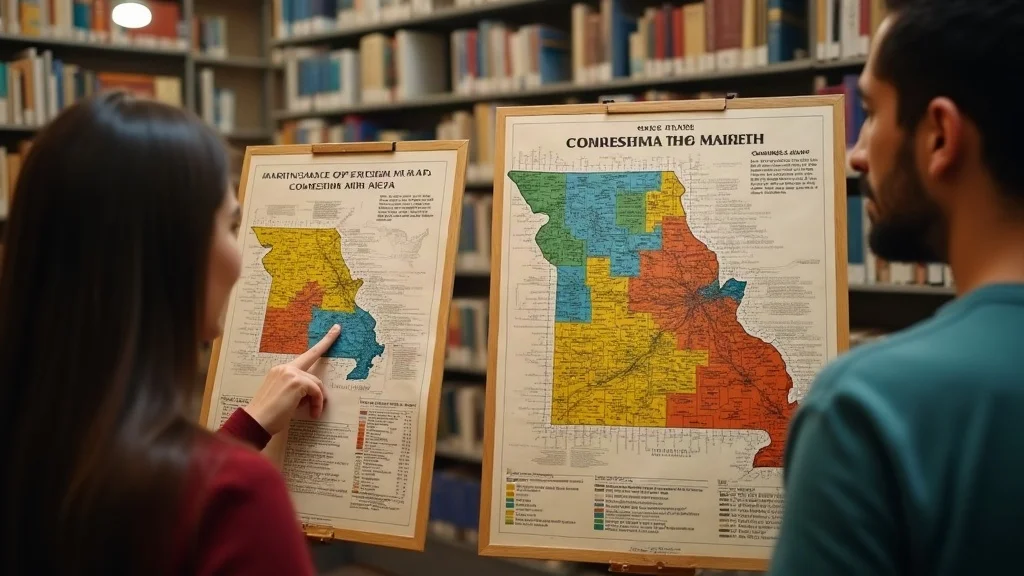
The most recent redistricting cycle brought about several high-profile changes for Missouri and St. Louis. Shifting populations required the state senate and house to draw new boundaries, sometimes splitting long-established neighborhoods into different districts. This process was particularly impactful in St. Louis, where debates raged over whether the new maps would reduce the influence of certain communities or better align representation with population data. Lawsuits were not uncommon, with the supreme court and lower courts hearing arguments over the fairness of district lines.
As a St. Louis policy expert wisely puts it:
“Redistricting is the foundation of representative democracy and shapes how communities are heard,” says a St. Louis policy expert.
These changes have lasting impact, influencing not only the current electoral landscape but also debates over the voting rights act, the future of ballot measures, and the overall strength of Missouri’s democratic institutions.
How the Recent Missouri Redistricting Unfolded
Missouri’s latest redistricting journey showcased the complexities of negotiating a fair congressional map. It began post-Census with public hearings and map proposals from the redistricting office and state legislature. Various maps were debated by lawmakers and reviewed by citizen commissions, as well as the courts. Residents in St. Louis and beyond participated by submitting feedback, attending forums, or working with advocacy organizations to influence outcome.
At several points, the process experienced gridlock and required intervention from the supreme court or a special session of the general assembly. Ultimately, the new maps were finalized after much negotiation, balancing demands for fair representation with legal and population constraints. The outcome is a new set of congressional districts that will shape Missouri’s political landscape for the next decade.
Key Steps in the Missouri Redistricting Process
The redistricting process unfolds in a series of well-defined stages. First, the state legislature or bipartisan commissions review population data to identify needed changes to congressional district and legislative boundaries. Next, proposed maps are shared with the public, with opportunities to comment and suggest adjustments. This transparent phase is crucial for protecting voting rights and ensuring all communities have a say.
After public comment ends, maps undergo legal review to check for compliance with the voting rights act and to avoid illegal gerrymandering. If disagreements arise, courts may become involved. The final step is adoption of new boundaries, which are then used for subsequent primary elections and midterm elections. Throughout, the redistricting office documents all changes and provides updates for voters and officials alike.

The Redistricting Office: Key Players and Their Roles
The redistricting office is a collaboration between the secretary of state, nonpartisan commissions, and at times, the state demographer. Each party brings expertise and priorities: lawmakers seek to secure partisan interests; commissions aim for fairness; while public input ensures community representation. The redistricting office manages submissions, legal reviews, and provides educational resources to the public. When disputes surface, the supreme court or federal court may arbitrate disagreements and impose final boundaries to guarantee compliance with federal and state law.
In practice, this team is responsible for publishing official maps, running open forums, and making sure Missouri’s new congressional map and legislative district lines meet legal standards and public expectations. Their work directly affects how millions of residents are represented at every level of government.
Missouri Redistricting and the New Congressional Map
With Missouri’s new congressional map in place, St. Louis voters face both opportunities and challenges. The updated district lines are designed to meet constitutional population requirements and federal rules set by the voting rights act. Yet, every redraw also alters the balance of power, sometimes benefiting one political party over another. For St. Louis, suburbs and surrounding communities, these tweaks to house and senate boundaries mean voters might see new candidates and issues on their ballots for upcoming elections.
Understanding these changes is crucial, as they can influence campaign priorities, which communities get more attention from elected officials, and how easily voters can advocate for or pass ballot measures. In St. Louis, keeping tabs on the redistricting office updates helps ensure that voting rights remain protected as the political landscape shifts.
Analyzing Missouri's Latest Congressional Map
The current congressional map aims to rebalance districts based on regional growth or population decline. In St. Louis, some established neighborhoods are now split between different congressional districts, while others have been unified. These changes affect election competitiveness, which communities receive focused legislative attention, and how minority voices are represented.
The map’s shape is not arbitrary: boundaries were carefully debated to uphold requirements from the voting rights act and to answer public calls for transparency and fairness. As a result, some districts are now more compact, while others—especially those bordering rapidly growing suburbs—have been redrawn to balance population loss in city centers and gains in outlying areas. This ongoing adaptation means that every voter should check which congressional district they now reside in before the next primary election.
Comparing Old and New Congressional Maps: Implications for St. Louis
Comparing St. Louis’s past and present congressional maps makes it clear how district boundaries can transform the city’s representation. Areas that were once solidly in a single house district might now straddle more than one. These shifts can change the political makeup of a district, introduce new faces into campaigns, and sometimes leave certain communities feeling disconnected from their representatives.
For St. Louis, one notable result is how some neighborhoods, particularly those historically involved in civic action and ballot measures, have been merged or split differently. This can affect coalition-building, turnout, and even the passage of local laws. Staying aware of these changes enables voters to adapt and protect their voting rights in a complex dynamic landscape.
| Feature | Previous Map | Current Map |
|---|---|---|
| St. Louis Congressional Districts | Neighborhoods grouped broadly, more crossover between city and county | Clearer divisions, some neighborhoods unified, new splits in suburbs |
| Minority Community Representation | Occasional dilution due to multi-district splits | Stronger clustering, some new protections under voting rights standards |
| Political Party Advantage | More “safe” districts, less competitive races | Greater competition in some districts, new swing areas |
| Impacts on Ballot Measures | Signature areas sometimes mismatched with communities | More alignment with community identity, easier signature outreach |
Voting Rights and Missouri Redistricting
Every redistricting cycle puts voting rights under a spotlight. Because the congressional map impacts where and how people vote, it also determines the reach of the voting rights act in Missouri. In St. Louis, neighborhoods with high diversity and mobility can see significant effects, with new district lines changing their political representation or consolidating power. These shifts are not merely technical: they dictate whose concerns reach lawmakers, which policy issues are prioritized, and how communities mobilize around midterm elections and primary elections.
Advocacy organizations, along with watchdog groups, monitor how the new district lines and congressional districts protect or challenge voting rights. This remains a central issue for St. Louis, driving efforts to guarantee minority voter protection and the integrity of ballot measures during future election cycles.
Impacts on St. Louis Voters' Representation
For voters in St. Louis, the most direct impact of redistricting is on how they are represented in Jefferson City and in Washington, D. C. Shifts in district lines may mean a long-serving Congressperson or state legislator is no longer your representative. This can realign constituent services, change priorities for government offices, and affect how easily residents can communicate local concerns.
The process also reshapes campaign dynamics, as both major political parties reassess their strongest and weakest districts. In some cases, this introduces greater competitiveness and participation, but in others, it can temporarily unsettle the connection voters feel to their representative. Staying engaged with updates from the redistricting office is key to understanding your current position and maximizing the influence of your vote.

Minority Communities and Voting Rights: What’s Changed?
One of the core mandates of Missouri's redistricting is compliance with the federal voting rights act, which safeguards minority voters from dilution of their electoral power. In the latest cycle, significant attention was paid to ensuring that urban communities in St. Louis and Kansas City were not split in ways that would make it harder for minority groups to elect candidates of their choice.
Recent changes have led to the creation of more compact districts focusing on community interests, often boosting representation for groups that had previously been spread thinly across multiple districts. However, the risk of dilution still exists and legal challenges remain. Local advocacy groups encourage voters to watch for how proposed and adopted boundaries might affect their neighborhoods’ ability to influence statewide and local elections.
Community Voices: St. Louis Residents Reflect on Voting Rights Post-Redistricting
Ballot Measures and Legal Challenges Shaping Missouri Redistricting
Ballot measures in Missouri have historically been tools for voters to influence the redistricting process itself, often seeking to increase transparency or change who controls the map-drawing. At the same time, every redistricting cycle is accompanied by court challenges. These legal actions, heard at various levels from local courts to the supreme court, are essential checks on the fairness and legality of new congressional maps.
St. Louis and statewide advocates have been particularly active in both passing and defending reforms via ballot and in the courtroom, ensuring that community interests remain front and center as new boundaries are drawn.
A Timeline of Ballot Measures Relevant to Missouri Redistricting
Several recent ballot measures have reshaped redistricting in Missouri. In the past decade, voters have both endorsed and overturned reforms changing the roles of the state demographer, giving special commissions a bigger say, or demanding added protections for voting rights. As each measure passed or failed, the composition and transparency of the redistricting office shifted—directly responding to public demand for more openness and accountability.
These initiatives, in tandem with federal mandates, help ensure that Missouri’s redistricting process remains accountable, and that community voices can still affect the kinds of legislative district lines that determine the state’s future.
Court Decisions and Ongoing Litigation
Every redistricting cycle brings its share of legal challenges. In Missouri, when the process breaks down, courts may step in to resolve disputes or provide final approval on ambiguous or contentious map sections. These court decisions are critical, as judges must weigh both local precedent and the reach of the federal court system, including directives from the supreme court.
Litigation often centers on claims of racial or partisan gerrymandering. In rare cases involving profound disagreement, courts have even been known to draw the maps themselves to ensure compliance with the voting rights act and equal population standards. Missouri’s legal battles over district lines have set precedent for both the state and national discussions about the best way to represent diverse populations while maintaining electoral fairness.
Redistricting Office Resources: Staying Informed
Staying updated on redistricting changes is vital for Missouri voters. The redistricting office publishes the latest versions of district maps, hearing schedules, and resources for public engagement. In St. Louis, local news outlets and civic organizations often provide forums and newsletters to help residents understand what’s new each cycle.
Beyond these, official government websites maintain archives, district search tools, and submission portals for public feedback. These resources are essential for ensuring that every voter knows their congressional district and understands how to make their voice heard.
Where to Find Official Maps and Updates
The easiest way to find up-to-date Missouri redistricting maps is through state government websites and the official redistricting office. These sources include comprehensive district search engines, detailed boundary PDFs, and tools for community feedback. Local boards and town halls in St. Louis also frequently provide updates on neighborhood impacts and opportunities for input on future changes.
- Official government websites for missouri redistricting
- Public input opportunities and feedback outlets
How St. Louis Voters are Affected by Missouri Redistricting
Few places in Missouri are as affected by redistricting as St. Louis. Recent boundary changes have reorganized many local neighborhoods across new or merged congressional and state senate districts. These shifts change which candidates appear on your ballot and what issues dominate political debates. Neighborhoods historically aligned within a single house district may now be split, while others are consolidated to strengthen common community interests.
Being aware of these new boundaries enables voters to better prepare for upcoming primary elections, recruiting candidates who represent their needs and ensuring that their voices remain a central feature of Missouri politics.
Neighborhood Shifts: Which St. Louis Areas See the Most Change?
St. Louis’s north and south sides have seen some of the most dramatic changes due to missouri redistricting. Areas near the city-county border are now more likely to sit in new congressional districts, possibly sharing representatives with suburban and even rural voters. Many central neighborhoods—long grouped together—may be divided, which can impact funding initiatives, constituent services, and the success of local ballot measures.
It is especially important for voters living near new dividing lines to look up their updated district and learn which races will be on their ballot for both state senate and congressional seats.
Practical Steps for Voters Navigating New Boundaries
Missouri redistricting means it’s essential for St. Louis voters to confirm their updated district, check their registration, and review sample ballots before election day. Visit your official redistricting office portal or local government site to use map lookup tools, or contact the secretary of state for assistance in finding your correct polling place.
Active engagement—such as attending town halls, providing public comment, or partnering with neighborhood associations—empowers voters to influence future cycles and hold officials accountable for how lines are drawn and how minorities’ voting rights are protected.
- Checklist: What St. Louis voters should do before the next election
- Check your congressional and legislative districts
- Update your voter registration if necessary
- Review sample ballots for new candidates and issues
- Attend public meetings or forums on redistricting
- Contact the redistricting office or local officials with questions
- Monitor neighborhood advocacy groups for community news
People Also Ask: Missouri Redistricting
How does Missouri redistricting work?
Missouri redistricting involves redrawing legislative and congressional district boundaries after every Census. The process is managed by the redistricting office, bipartisan commissions, and occasionally the courts, to ensure compliance with the voting rights act and equal population statutes. Maps are proposed, debated, and approved for use in upcoming elections.
Who decides Missouri’s congressional map?
Missouri’s congressional maps are created by a mix of legislative committees, bipartisan citizen panels, and, if necessary, the courts. In cases of deadlock or legal challenge, the process may be finalized by the state supreme court to ensure nonpartisan compliance with the law.
How often does Missouri redistricting occur?
Missouri redistricting happens every ten years, following the release of United States Census data. This decennial process ensures that each district reflects population changes to provide fair representation in the state legislature and Congress.
How will Missouri redistricting impact my voting rights?
Redistricting can impact your voting rights by changing which district you vote in, potentially shifting your representation and the issues on your ballot. If done fairly, it ensures equal voice for all groups; if not, it may dilute minority power or skew political influence.
Frequently Asked Questions about Missouri Redistricting
What triggers missouri redistricting and how does it affect ballot measures?
Missouri redistricting is triggered by the decennial Census, which measures shifts in population that require adjustment of district boundaries. These changes can affect the success of ballot measures by altering the groupings of voters who can propose or approve legislative changes.
How do court cases influence the redistricting office’s decisions?
Court cases can overturn or amend redistricting maps created by the redistricting office. Judges review whether boundaries adhere to legal standards, such as those set by the voting rights act, and may order adjustments if they find evidence of unfair or illegal practices.
Where can voters access updated congressional maps?
Voters can find the latest congressional maps on the official Missouri redistricting office website, through the secretary of state’s public archives, or at local government offices. Maps are also frequently shared by news outlets and civic organizations in St. Louis.
Key Takeaways: Missouri Redistricting and Voter Impact
- Recap of how missouri redistricting shapes congressional maps
- Summary of changes for St. Louis voters’ representation and voting rights
Take Action: Explore Missouri’s New Congressional Map and Stay Engaged
Review your new congressional district, connect with local advocacy groups, and participate in public forums to ensure your voice is heard as St. Louis adapts to Missouri's latest redistricting changes.
If you’re interested in expanding your understanding of how local media, civic engagement, and policy developments intersect in St. Louis, consider exploring the broader landscape of community-driven news and analysis at St. Louis Media Channel. Their in-depth features and timely updates offer valuable perspectives on the evolving political and social climate, helping residents stay informed and proactive. By engaging with these resources, you can deepen your knowledge of not just redistricting, but also the wider forces shaping St. Louis’s future. Take the next step in civic participation and discover how informed communities can drive meaningful change.







Write A Comment